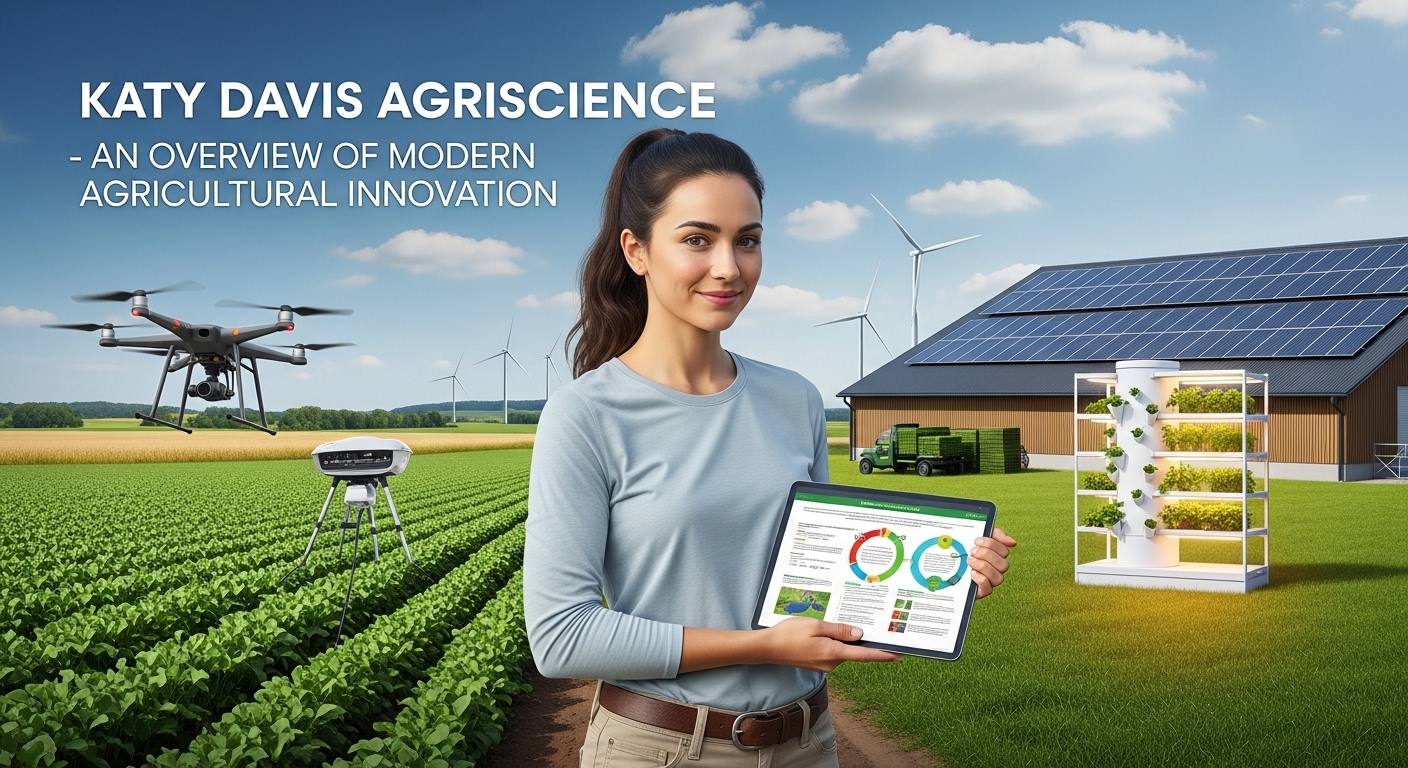
In the rapidly evolving field of agriculture, innovative approaches and research-driven solutions are essential for improving productivity, sustainability, and efficiency. Katy Davis Agriscience represents a modern perspective on agricultural development, combining scientific research, practical farming techniques, and technology-driven strategies to optimize crop yield and resource management. By integrating scientific principles with practical application, Katy Davis Agriscience aims to address challenges faced by modern farmers, including climate variability, soil health, and sustainable resource use. This approach emphasizes a balance between scientific advancement and real-world agricultural practice, ensuring that innovations are both effective and practical for the farming community.
The Vision Behind Katy Davis Agriscience
The core vision of Katy Davis Agriscience focuses on transforming agriculture into a more sustainable and productive sector through research, technology, and education. This vision is centered on providing farmers, agricultural businesses, and communities with the knowledge and tools they need to make informed decisions. By promoting science-based solutions and sustainable practices, Katy Davis Agriscience contributes to long-term food security and environmental stewardship. Its vision extends beyond productivity alone, aiming to create systems that respect natural resources while maximizing agricultural output.
Scientific Research in Katy Davis Agriscience
Scientific research forms the backbone of Katy Davis Agriscience. Through field studies, laboratory testing, and data analysis, the platform explores innovative ways to improve crop health, soil quality, and pest management. Research initiatives often focus on optimizing fertilization techniques, identifying disease-resistant plant varieties, and analyzing the impact of environmental factors on crop growth. By leveraging empirical evidence, Katy Davis Agriscience ensures that agricultural practices are effective, scientifically sound, and adaptable to various climates and soil types.
Technology Integration in Agriculture
Modern agriculture increasingly relies on technology for efficiency and precision. Katy Davis Agriscience integrates digital tools, sensors, and data-driven platforms to enhance decision-making on farms. Technologies such as soil moisture sensors, GPS-guided equipment, and crop monitoring software allow farmers to implement precision agriculture techniques, reducing waste and increasing yield. By incorporating technology alongside scientific research, Katy Davis Agriscience supports modern farming methods that are both resource-efficient and environmentally responsible.
Sustainable Practices in Katy Davis Agriscience
Sustainability is a core principle of Katy Davis Agriscience. Practices such as crop rotation, organic fertilization, water-efficient irrigation, and soil conservation are emphasized to ensure long-term agricultural productivity. By promoting methods that protect natural resources, Katy Davis Agriscience addresses concerns related to soil degradation, water scarcity, and ecological imbalance. These practices not only improve crop health but also enhance the resilience of farming systems against changing climatic conditions.
Crop Management Strategies
Effective crop management is essential for maximizing yield and minimizing losses. Katy Davis Agriscience provides guidance on crop planning, planting schedules, pest and disease management, and nutrient optimization. By following science-backed strategies, farmers can ensure healthy plant growth, reduce dependency on chemical inputs, and improve harvest outcomes. The focus on crop-specific recommendations ensures that farmers receive tailored guidance suitable for their local environmental and climatic conditions.
Soil Health and Nutrient Optimization
Healthy soil is the foundation of productive agriculture, and Katy Davis Agriscience places strong emphasis on soil management. Regular soil testing, analysis of nutrient content, and adoption of appropriate fertilization techniques are key practices promoted through this initiative. By understanding the specific needs of the soil, farmers can improve fertility, structure, and moisture retention, which directly impacts crop quality and yield. Soil health management is not just about productivity but also about maintaining ecological balance and long-term agricultural sustainability.
Pest and Disease Management
Pests and diseases are among the major challenges in agriculture, often leading to significant losses if not properly managed. Katy Davis Agriscience employs a combination of scientific monitoring, integrated pest management, and environmentally friendly solutions to control these threats. By using targeted interventions and preventive measures, farmers can minimize damage while reducing reliance on broad-spectrum chemical pesticides. This approach balances productivity with environmental responsibility, ensuring healthier crops and safer ecosystems.
Educational Outreach and Farmer Support
Education and knowledge dissemination are essential components of Katy Davis Agriscience. Through workshops, online resources, and community engagement programs, the initiative supports farmers in adopting modern agricultural practices. Providing guidance on best practices, technology adoption, and sustainable methods helps bridge the gap between scientific research and practical farming. Empowering farmers with knowledge ensures that innovations are effectively implemented, resulting in tangible improvements in crop yield and farm management.
The Role of Innovation in Katy Davis Agriscience
Innovation drives the continuous evolution of agriculture, and Katy Davis Agriscience emphasizes the adoption of novel techniques and tools. From experimenting with new crop varieties to exploring advanced irrigation systems, innovation is integrated into every aspect of the initiative. This proactive approach allows farming systems to remain adaptive, efficient, and resilient to both economic and environmental changes. Continuous innovation ensures that farmers are not only productive today but also prepared for the challenges of the future.
Environmental Responsibility
Environmental responsibility is closely linked to sustainable agricultural practices, and Katy Davis Agriscience prioritizes minimizing the ecological footprint of farming. Strategies include reducing chemical inputs, conserving water, maintaining biodiversity, and implementing soil conservation techniques. By aligning productivity goals with environmental stewardship, Katy Davis Agriscience demonstrates that agriculture can be both profitable and responsible, ensuring that natural resources are preserved for future generations.
Katy Davis Agriscience and Future Agriculture
Looking forward, Katy Davis is poised to contribute significantly to the future of agriculture. By integrating research, technology, and sustainability, it provides a roadmap for modern farming practices that are resilient, productive, and environmentally conscious. Its emphasis on education, innovation, and resource management ensures that agricultural communities are better prepared to meet the demands of a growing population and changing climatic conditions. Katy Davis exemplifies how scientific insight can be translated into practical solutions that benefit both farmers and the broader ecosystem.
Conclusion
Katy Davis represents a comprehensive and modern approach to agriculture that balances scientific research, technological integration, and sustainable practices. By focusing on crop management, soil health, pest control, and farmer education, the initiative empowers agricultural communities to achieve long-term productivity and ecological responsibility. As the agricultural landscape continues to evolve. Katy Davis serves as a model for innovative, efficient, and sustainable farming practices that address both current and future challenges.