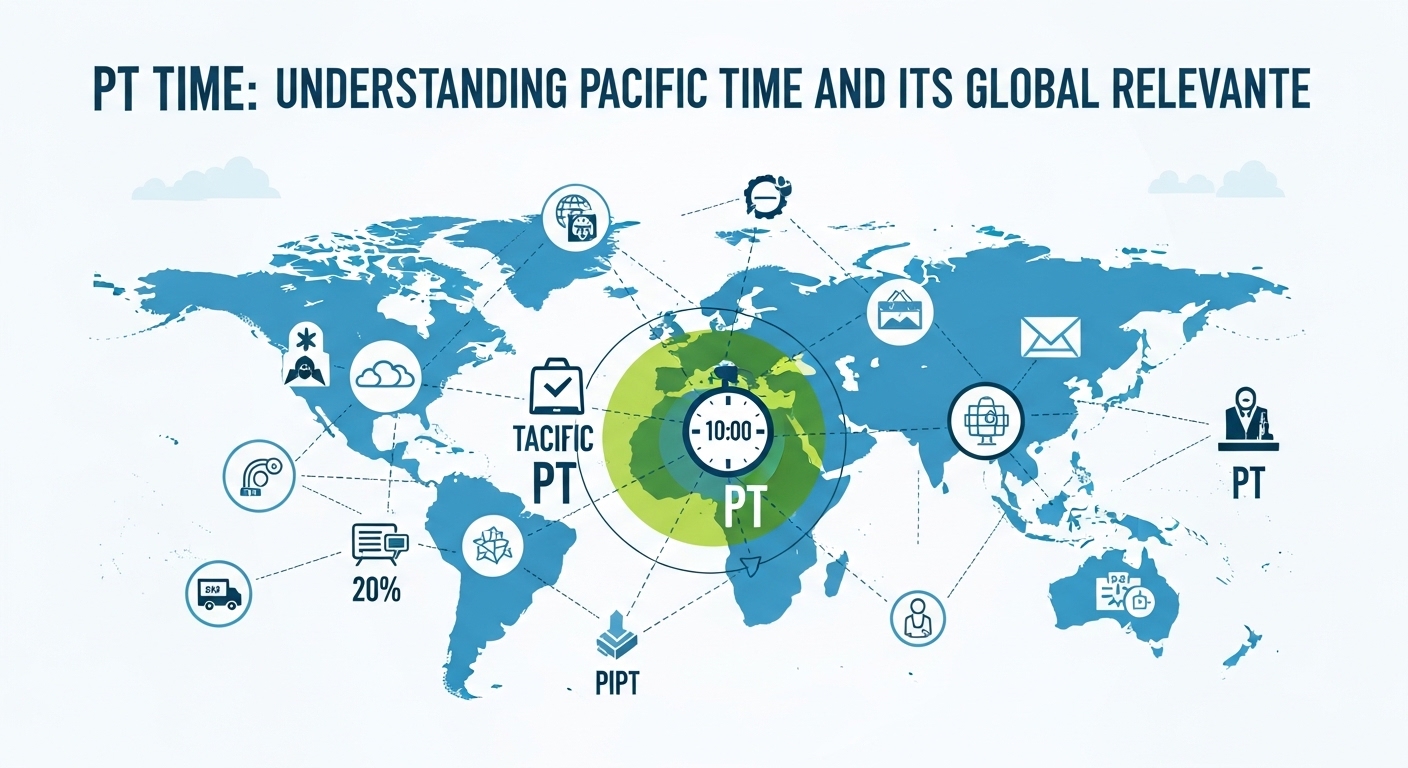
In our interconnected world, understanding time zones is essential for communication, travel, and business operations. PT time, short for Pacific Time, is one of the key time zones in North America. It governs daily schedules in regions along the west coast of the United States and Canada, influencing work hours, broadcasts, and international coordination. Knowing how PT time aligns with other global time zones helps individuals and organizations plan effectively. Whether scheduling virtual meetings, booking flights, or coordinating deadlines, understanding PT time ensures seamless operations and reduces confusion in both personal and professional contexts.
What is PT Time
PT time, or Pacific Time, refers to the time zone covering the western coast of the United States and Canada. It is eight hours behind Coordinated Universal Time (UTC−8) during standard time and seven hours behind (UTC−7) during daylight saving time. This time zone includes major cities such as Los Angeles, San Francisco, and Vancouver. PT time is widely used for scheduling in entertainment, technology, and business sectors because of the concentration of industries in this region. Understanding PT time helps individuals coordinate activities across different time zones and ensures accurate timing for events, broadcasts, and deadlines.
Difference Between PT and Other Time Zones
Pacific Time differs from other North American time zones such as Eastern Time (ET), Central Time (CT), and Mountain Time (MT). For example, PT is three hours behind ET, two hours behind MT, and one hour behind CT. These differences impact business operations, travel schedules, and virtual communications. When scheduling meetings across multiple regions, understanding the offset is crucial to avoid confusion. PT time also differs from global time zones, requiring careful planning when coordinating internationally. Awareness of these differences ensures efficiency in global communications and helps individuals maintain punctuality across time zones.
Daylight Saving and PT Time
PT time observes daylight saving time, shifting clocks forward by one hour in spring and back in autumn. During daylight saving, Pacific Daylight Time (PDT) is used, which is UTC−7. This practice aims to maximize daylight during active hours and conserve energy. Organizations and individuals must adjust schedules accordingly to maintain coordination. Failure to account for daylight saving changes can result in missed meetings or disrupted workflows. Digital devices often update automatically, but manual confirmation remains important for critical activities. Understanding the impact of daylight saving on PT time ensures smooth scheduling and reliable timing for personal and professional commitments.
Importance of PT Time for Business
PT time plays a vital role in business operations, especially for companies with headquarters or operations on the west coast. Coordinating meetings with teams across different time zones requires awareness of PT time to avoid conflicts. Technology, entertainment, and finance industries often base releases or broadcasts according to PT time. Global collaborations necessitate precise conversion to local times for international partners. Businesses that understand and plan around PT time can enhance productivity and minimize scheduling errors. Being mindful of PT time ensures that operations remain efficient, deadlines are met, and global communication flows smoothly without disruption.
PT Time in Travel Planning
Travelers must understand PT time to manage flights, hotel check-ins, and transportation effectively. Time zone differences affect departure and arrival schedules, layovers, and connecting flights. Miscalculating PT time can lead to missed flights or appointments. Airports and airlines often use local time, requiring travelers to convert accurately when moving between regions. Awareness of PT time also helps with jet lag management and itinerary planning. By incorporating PT time into travel plans, individuals can ensure timely arrivals, reduce stress, and optimize their schedules for sightseeing, business, or personal commitments.
Scheduling Virtual Meetings with PT Time
Virtual meetings often involve participants from multiple time zones, making PT time a key reference point. Knowing the exact offset helps in sending invitations that accommodate all attendees. Video conferencing platforms often provide options to display local and PT time simultaneously, simplifying planning. For global teams, understanding PT time ensures meetings start on schedule and reduces confusion over timing. Professionals using PT time can maintain punctuality and enhance collaboration. Proper planning around PT time is essential for maintaining productivity, ensuring everyone can participate effectively, and fostering clear communication across geographically dispersed teams.
PT Time in Media and Entertainment
The media and entertainment industry frequently uses PT time to schedule releases, broadcasts, and streaming events. Television shows, online content, and live streams often follow Pacific Time due to the location of major networks and studios. Understanding PT time ensures viewers access content at the correct local time. Advertisers and content distributors also rely on PT time for campaign planning and audience targeting. Global audiences need to convert PT time to their local zones to avoid missing events. Accurate comprehension of PT time ensures seamless consumption of media content and enhances viewer satisfaction.
PT Time and Technology Coordination
Technology companies often operate on PT time for software releases, updates, and server maintenance. Companies in Silicon Valley and other west coast hubs schedule rollouts according to Pacific Time to coordinate engineering teams efficiently. International users must convert PT time to their local time zones to access services during maintenance windows or product launches. Understanding PT time is crucial for IT professionals, developers, and support teams to ensure smooth operations. Accurate time zone coordination reduces downtime, prevents errors, and enhances customer satisfaction. PT time serves as a standard reference in technological planning and global product distribution.
Tools to Convert PT Time
Various tools are available to help individuals and businesses convert PT time to other time zones accurately. Online converters, world clocks, and calendar applications provide real-time adjustments for both standard and daylight saving time. These tools simplify global coordination by automatically accounting for differences and changes in time zones. Accurate conversion prevents scheduling mistakes and ensures effective communication. Professionals and travelers alike can rely on these tools for meetings, events, and planning purposes. Utilizing PT time conversion tools ensures timely interactions and helps maintain efficiency in international business, remote work, and cross-border collaborations.
Conclusion
PT time serves as a crucial reference for individuals, businesses, and travelers, particularly on the west coast of North America. Its impact spans communication, media, technology, and travel planning, requiring careful attention for accurate scheduling. Understanding daylight saving changes, time offsets, and conversion tools ensures smooth coordination across regions. PT time not only simplifies operations for local organizations but also enables global connectivity and collaboration. By integrating PT time awareness into daily planning, users can enhance productivity, maintain punctuality, and participate effectively in personal, professional, and international activities, making it an essential component of modern time management.