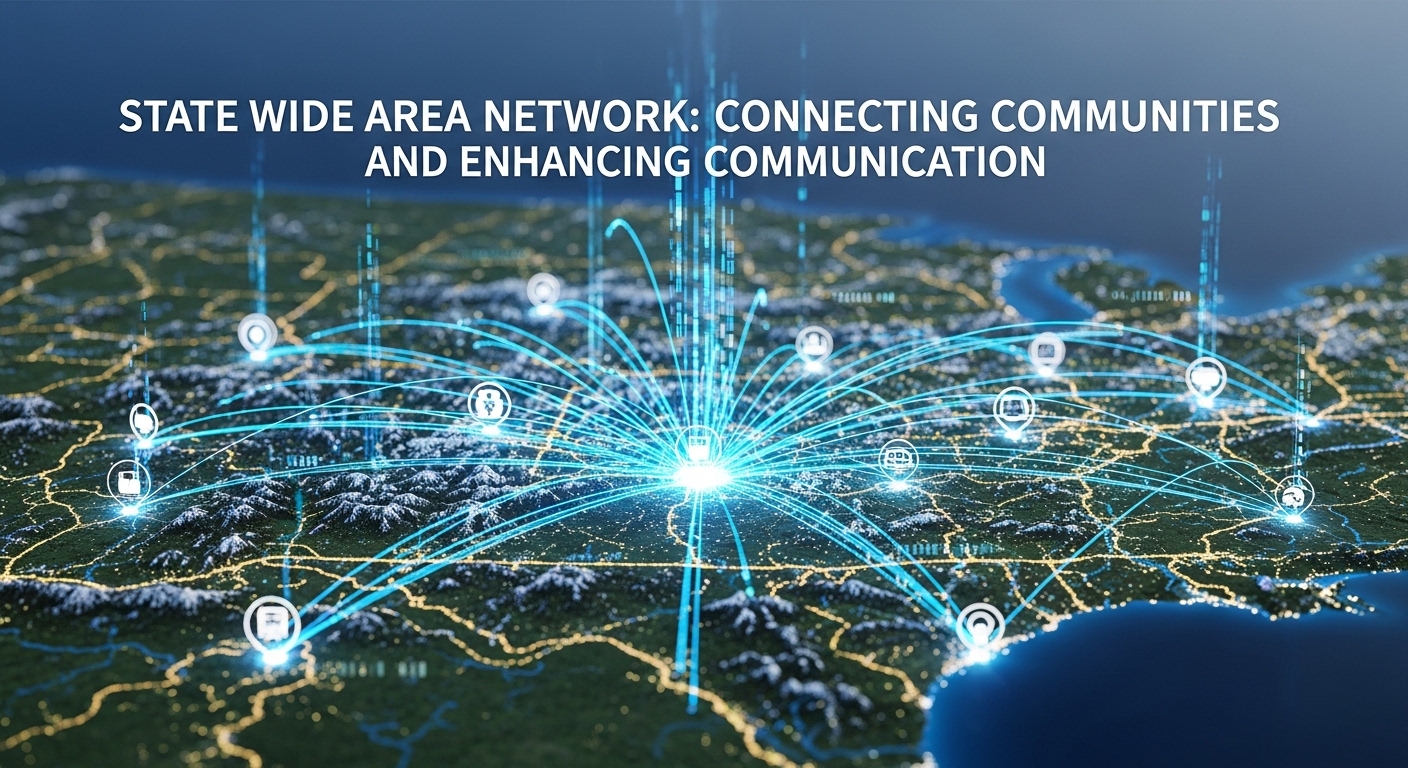
In an era defined by rapid digital connectivity, a state wide area network plays a crucial role in linking government institutions, educational facilities, healthcare providers, and businesses across large geographic regions. This network architecture allows organizations to share data, applications, and resources efficiently while maintaining security and reliability. By implementing a state wide area network, states can improve communication, streamline operations, and support critical services that rely on real-time information. Understanding the structure, benefits, and management of these networks is essential for organizations seeking to leverage technology for enhanced collaboration and operational efficiency.
What is a State Wide Area Network
A state wide area network is a large-scale communication network that connects multiple local networks across an entire state or region. Unlike smaller networks limited to individual offices or campuses, it spans cities and towns, providing secure and high-speed connectivity for government agencies, educational institutions, and healthcare facilities. The network enables data sharing, centralized resource management, and coordinated communication between various organizations. By integrating local area networks into a unified state-level system, a state wide area network enhances operational efficiency, supports disaster recovery, and ensures that critical services remain accessible across diverse locations.
Key Components of a State Wide Area Network
A state wide area network relies on several key components, including routers, switches, communication links, and network management tools. Routers direct traffic between local networks, while switches manage internal communication within individual sites. Communication links, often fiber-optic cables or dedicated leased lines, provide high-speed connectivity across long distances. Network management tools monitor performance, detect issues, and ensure security compliance. These components work together to create a robust and reliable infrastructure. By integrating modern technologies and centralized control, a state wide area network ensures seamless communication, consistent performance, and efficient data transmission across all connected locations.
Benefits of a State Wide Area Network
Implementing a state wide area network offers numerous advantages. It enables centralized management of resources, allowing for better monitoring and maintenance of IT systems. Organizations can share applications and databases efficiently, reducing redundancy and operational costs. The network improves communication between departments, agencies, and partner institutions, facilitating coordinated responses during emergencies. Additionally, a state wide area network enhances security by providing controlled access and encrypted data transmission. These benefits collectively strengthen service delivery, improve collaboration, and support innovation within the state. A well-implemented network contributes to economic growth and the overall efficiency of public services.
Applications in Government
Government institutions benefit significantly from a state wide area network. Agencies can share information in real time, streamline administrative processes, and improve coordination between departments. Emergency services, law enforcement, and public health organizations rely on these networks to respond quickly to critical situations. Budget management, data storage, and inter-agency collaboration become more efficient through centralized systems. The network also supports secure communication channels for sensitive information, ensuring compliance with regulatory requirements. By leveraging a state wide area network, governments enhance transparency, operational effectiveness, and service delivery to citizens across the entire state.
Role in Education
Educational institutions gain considerable advantages from a state wide area network. Schools, colleges, and universities can access shared digital resources, online learning platforms, and centralized databases. Teachers and students benefit from reliable connectivity for e-learning, research, and collaboration between campuses. Administrative processes, including student records management and communication with parents, become more efficient. Additionally, distance learning programs rely on the network’s stability to reach students in remote areas. By integrating a state wide area network, educational systems can provide equitable access to technology, enhance learning experiences, and foster collaboration between institutions across the state.
Impact on Healthcare Systems
Healthcare providers also rely on state wide area networks for secure and efficient communication. Hospitals, clinics, and laboratories can exchange patient information, test results, and medical imaging in real time. Telemedicine services benefit from reliable connectivity, enabling remote consultations and monitoring. The network supports data analytics, resource allocation, and emergency response coordination. By connecting healthcare facilities, a state wide area network improves patient care, reduces delays, and enhances operational efficiency. It also strengthens collaboration between public health agencies, enabling better planning and response during outbreaks or natural disasters, ultimately contributing to improved health outcomes.
Security and Compliance Considerations
Security is a critical aspect of any state wide area network. Protecting sensitive data from unauthorized access, cyberattacks, and breaches requires encryption, firewalls, and secure authentication methods. Compliance with national and state regulations ensures that information handling meets legal standards. Network administrators must regularly update security protocols, monitor traffic, and conduct audits to identify vulnerabilities. Implementing multi-layered security measures and strict access controls helps prevent disruptions and safeguards critical services. By prioritizing security and compliance, a state wide area network can operate reliably, maintaining trust among stakeholders while providing uninterrupted connectivity for essential state functions.
Challenges in Implementation
Establishing a state wide area network comes with several challenges. High initial costs, complex infrastructure planning, and coordination among multiple agencies can slow implementation. Ensuring consistent network performance across diverse geographic areas requires robust design and ongoing maintenance. Connectivity in remote or rural locations may demand additional investment in fiber-optic or satellite links. Network administrators must also manage evolving technology standards and cybersecurity threats. Despite these challenges, careful planning, resource allocation, and phased deployment strategies allow states to overcome obstacles. Addressing these issues ensures the network delivers long-term efficiency, reliability, and scalability.
Future Trends and Advancements
The future of state wide area networks includes faster connectivity, cloud integration, and enhanced security features. Emerging technologies such as 5G, software-defined networking, and artificial intelligence will improve performance, management, and adaptability. These advancements allow real-time data analysis, predictive maintenance, and smarter resource allocation. Integration with Internet of Things devices and smart city initiatives will further expand the network’s impact. States that invest in modernizing their networks can provide faster, more reliable services to citizens, educational institutions, and businesses. Adapting to these trends ensures that state wide area networks remain resilient, scalable, and capable of supporting future technological demands.
Conclusion
A state wide area network serves as a backbone for communication, collaboration, and operational efficiency across government, education, healthcare, and business sectors. By connecting diverse organizations and enabling secure, real-time data sharing, these networks improve service delivery and support innovation. While implementation presents challenges, careful planning, modern technology integration, and strong security measures ensure reliable and scalable performance. The continued evolution of state wide area networks promises faster connectivity, enhanced management capabilities, and expanded applications, making them essential infrastructure for modern states seeking efficiency, reliability, and future-ready digital solutions.